
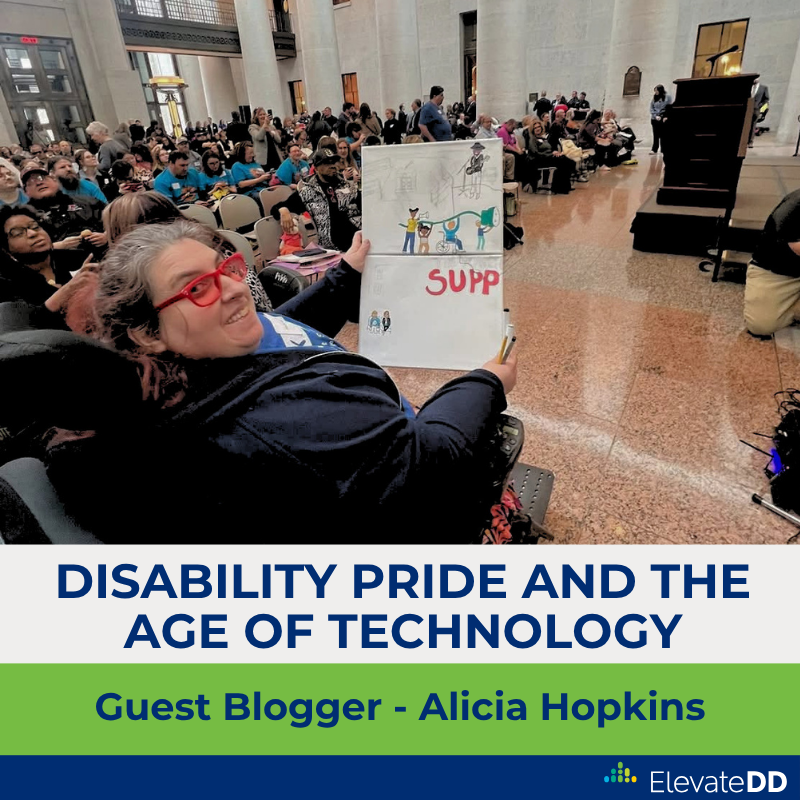
In this guest post, Alicia Hopkins shares how technology shapes her everyday life as a person with a learning disability. While digital tools have helped her write books, participate in advocacy, and engage in her community, they do not eliminate every barrier to understanding information or navigating everyday systems.
Written by Alicia Hopkins and dictated by Amy Savage, Speech-Language Pathologist, this piece highlights the importance of recognizing invisible disabilities and understanding that access to technology does not always mean access to information. Alicia’s perspective is a reminder that accessibility must account for how people learn, communicate, and make sense of the world around them.
Some disabilities are invisible. Many disabilities are visible like mine. I was diagnosed early but In the age of technology, we don’t always catch learning disabilities in grade school. A lot of schools use computers in the classroom so that can often hide the fact that there might be an issue. Also, beyond high school education and an IEP, there isn’t much support. After you graduate, there is not support unless you go to college.
When you think about it, how many handwritten things do people have in the age of digital forms and electronic signatures? Add to that, iPhones and predictive text, tablets, and iPads and phones.
My world is often invisible. I face a lot of stereotypes because I have accomplishments in my life. Those accomplishments were possible because of technology. I am very grateful for technology. It helps me do amazing things like write books, be a part of advocacy, and be a part of my community. It also makes me work a lot harder on paperwork at doctor’s appointments, keep track of a lot of paperwork and because I read and write phonetically, it takes a long time to understand what I am reading. This impacts a lot of my life, what jobs I apply for, and how I understand important information about my healthcare, services, I receive, and how I vote.
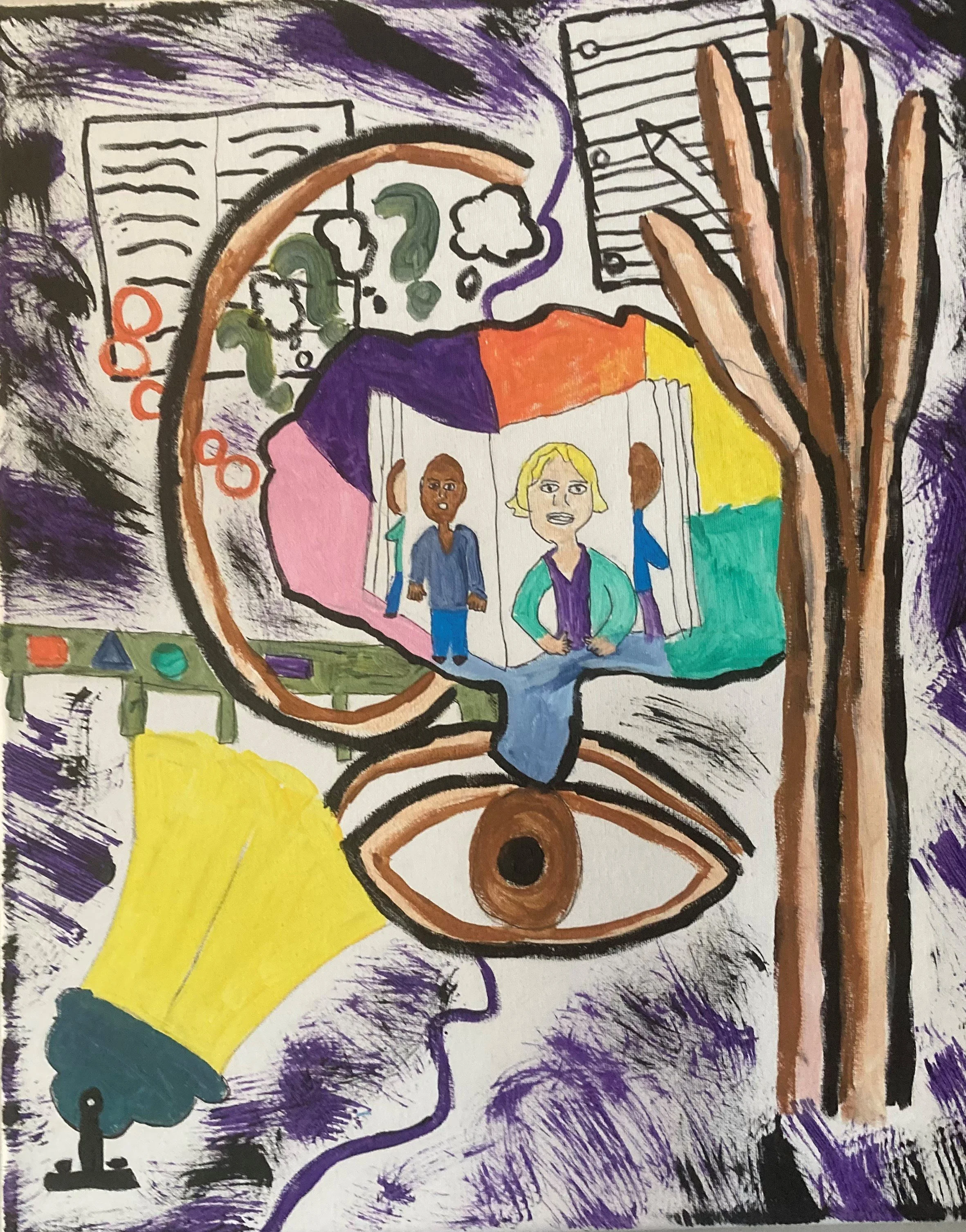
Technology does help me listen to information, but it is not a “cure all” because audio alone does not help me comprehend what I am listening to. Last year, I found that it helps me to draw when I listen so I can understand more. I use art drawings to live my best life and do things to help others and thrive. Learning disabilities impact many people and it is important to have these conversations. It is also advocacy to write about it.
Disability pride is people seeing you as you are.