
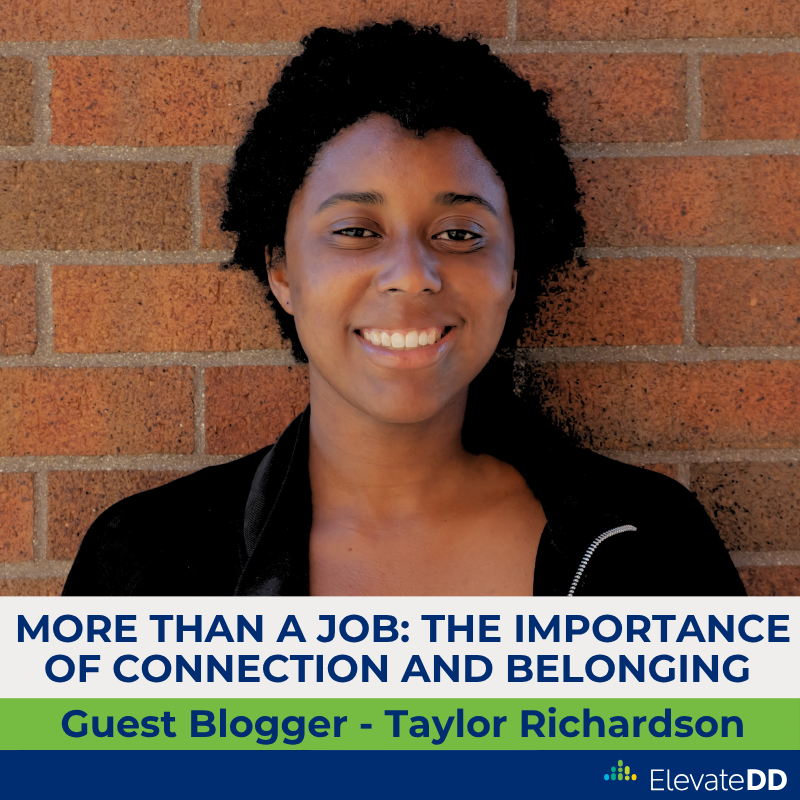
October is National Disability Employment Awareness Month, a time to recognize the contributions of workers with disabilities and the barriers that can stand in the way of meaningful employment. As an ElevateDD Voices Fellow, Taylor brings a personal perspective to this conversation, sharing insights that challenge us to think differently about inclusion and what it takes to create workplaces where people with developmental disabilities have the opportunity to contribute and thrive.
Relationships are one of the most important things we have. We can accomplish some things on our own, but there will always be times when we need help from others or have an opportunity to learn from someone else's strengths. Building relationships, communicating effectively, and learning to trust one another create a foundation for everything else.
That is one of the reasons I was excited to host this year's Big Table conversation about employment and relationships. These topics are important to me because of my own experiences navigating different jobs and roles, and because I believe we need to do more to help people with developmental disabilities succeed in the workplace and in their communities.
Understanding How We Learn and Communicate
One thing I wish more people understood is that our brains are wired differently, and we do not all process information in the same way. My nonverbal learning disability affects how I process information, and I have experienced situations where I struggled to keep up with the pace of a job even though I was capable of learning the work.
For example, when I worked in sales at a retail store, my training lasted only three weeks. That was not enough time for me to fully learn the job and feel prepared to succeed. I can learn new things, but sometimes I need more time, opportunities to practice, and ongoing support.
Many workplaces are fast-paced and focused on numbers, deadlines, and performance expectations. There is often not enough training or understanding of how to support employees with developmental disabilities. Accommodations, such as being able to take notes, can make a difference. We need to normalize accommodations and recognize that people have different ways of thinking, learning, and retaining information.
We also need to humanize the process. Every person with a disability is different, and there is no single approach that works for everyone. Learning how to communicate our needs and advocate for ourselves is important, but employers also have a responsibility to listen, ask questions, and create an environment where employees feel comfortable discussing what helps them succeed.
Not all disabilities are visible. Sometimes, differences in communication or information processing can be misunderstood. People may think someone is communicating too much or may make assumptions about someone who is quiet. I believe we need to be more open to understanding one another. Just because someone is not speaking at a particular moment does not mean they have nothing to say.
What I Learned at the Big Table
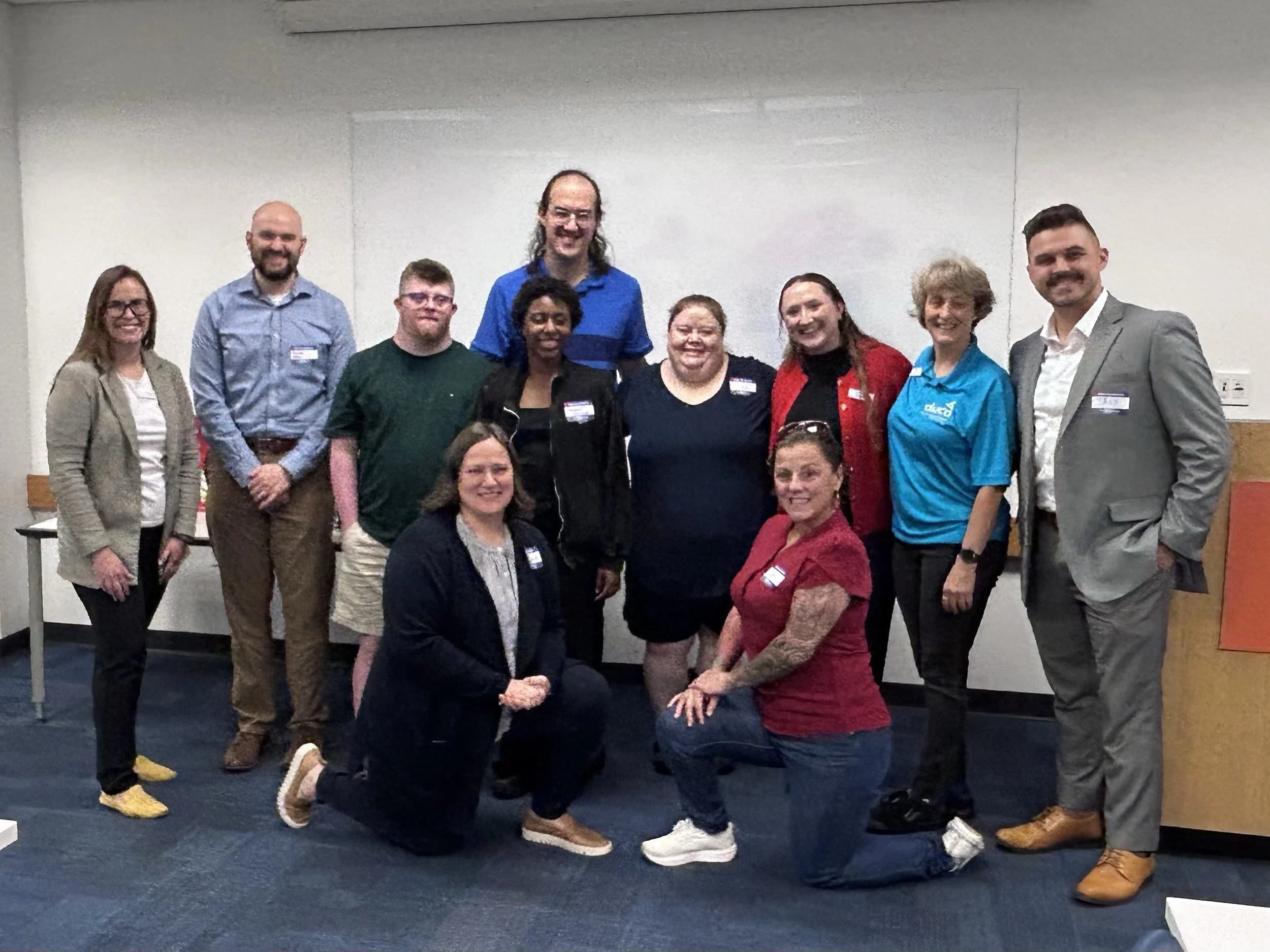
Our Big Table conversation brought together people with different experiences and perspectives, including my provider from Frontline DD, family members of people with disabilities, employees from Cardinal Health, the School Board President for Olentangy Local Schools, and employees from DSACO and ElevateDD
We discussed workplace training, effective communication, accessible employment paperwork, and the importance of creating environments where people can succeed. We also talked about practical ways to support individual goals. For example, we discussed using a QR code that could direct people to a website to help promote my babysitting business.
One of the biggest themes for me was accountability. During the larger conversation, I heard someone talk about the need for accountability in employment. That stuck with me because the system itself needs to become more accessible. We cannot expect people with developmental disabilities to be successful if workplaces are not willing to examine their practices and make changes.
We also talked about personality differences and how workplaces can benefit from recognizing different strengths. Leadership does not always look the same. Introverted people can be leaders, too. Someone who is quiet and observant may notice things happening around them that others miss.
Another fellow shared that conversations and social interactions can sometimes be exhausting and that she needs time to recharge afterward. That was a reminder that people experience communication differently. We need to make room for those differences instead of expecting everyone to interact in the same way.
I want more environments where people feel comfortable being their authentic selves. It can be difficult to show up as yourself when you feel that others do not accept you. Unspoken expectations can make this even harder because you may not know what is expected of you until something goes wrong.
We all have a responsibility to be more honest and vulnerable when we do not understand something. Instead of making assumptions, we can ask questions, listen to one another, and look for ways to meet in the middle.
Creating Workplaces Where People Can Succeed
My own experiences have shown me that a job is about more than whether someone can complete a task quickly. Training, communication, relationships, and workplace culture all play an important role.
I have experienced situations where training did not provide enough time to learn, accommodations were difficult to obtain, and expectations were not always communicated clearly. In one workplace, unclear safety procedures raised serious concerns for me about how children with disabilities were being supported. That experience reinforced how important clear communication, appropriate training, and shared values are in the workplace.
When a job involves caring for other people, employees need to understand how to keep those individuals safe and supported. Employers should be willing to listen to employees who raise concerns and take their perspectives seriously.
I believe employers can do more to create workplaces where people with developmental disabilities can thrive. That includes providing clear job descriptions, making hiring processes accessible, offering consistent accommodations, and training staff on disability awareness and communication. It also means creating opportunities for mentorship, career advancement, and leadership.
Most importantly, employers need to listen to people with disabilities and include them in decisions about workplace policies and practices. Accommodations should not be treated as favors. They should be part of building a workplace where people have a fair opportunity to succeed.
Inclusion Is Everyone's Responsibility
Creating more inclusive workplaces and communities cannot fall on one person or one organization. It takes all of us.
Community members can help by challenging stereotypes, communicating respectfully, and creating opportunities for people with disabilities to participate and build relationships. Families can support independence by encouraging decision-making, self-advocacy, and autonomy while making sure their loved ones' voices remain at the center of decisions.
Organizations also have an important role to play. Programs should be designed with people with disabilities, not simply for them. That means inviting people with lived experience to help shape programs, make decisions, and lead conversations. It also means communicating clearly, providing accessible materials, and building relationships that continue beyond a single event.
These changes may seem small, but they can make a meaningful difference in whether someone feels welcomed, respected, and able to participate.
We need to recognize that people with developmental disabilities are not all the same. We each have different strengths, needs, communication styles, and goals. When we take the time to understand one another, we can build stronger relationships and create more opportunities for everyone to contribute.
The Importance of Listening and Understanding
Before the Big Table, I wasn't sure exactly how the conversation would go. I knew everyone would bring different opinions and experiences, and not everyone in the room had a disability. What stood out to me was how we were still able to find ways to relate to one another.
Hearing from family members about the challenges their children experience every day was meaningful to me. I appreciate seeing parents advocate for their children, and I hope the parents who participated left with a better understanding of how to approach and communicate with people with developmental disabilities.
I have learned through conversations with families that communication styles can look very different between parents and their children. During a storytelling workshop, I spoke with parents about these differences, and one parent asked how they could change their approach. I believe both sides have to be willing to listen and work toward understanding for meaningful change to happen.
For me, it makes a difference when someone listens first and takes the time to understand my communication style and preferences. I can experience anxiety when I do not feel understood, and I need to feel emotionally safe to share certain things. Past experiences have affected how comfortable I feel expressing myself, and sometimes I become more closed off when I do not feel safe.
I still find myself masking at times, and I know learning to move away from that takes time. I hope we can be more patient with people as they learn to feel comfortable showing up as their authentic selves. We cannot expect someone to feel safe being themselves if their differences are not accepted.
Finding My Voice as a Leader
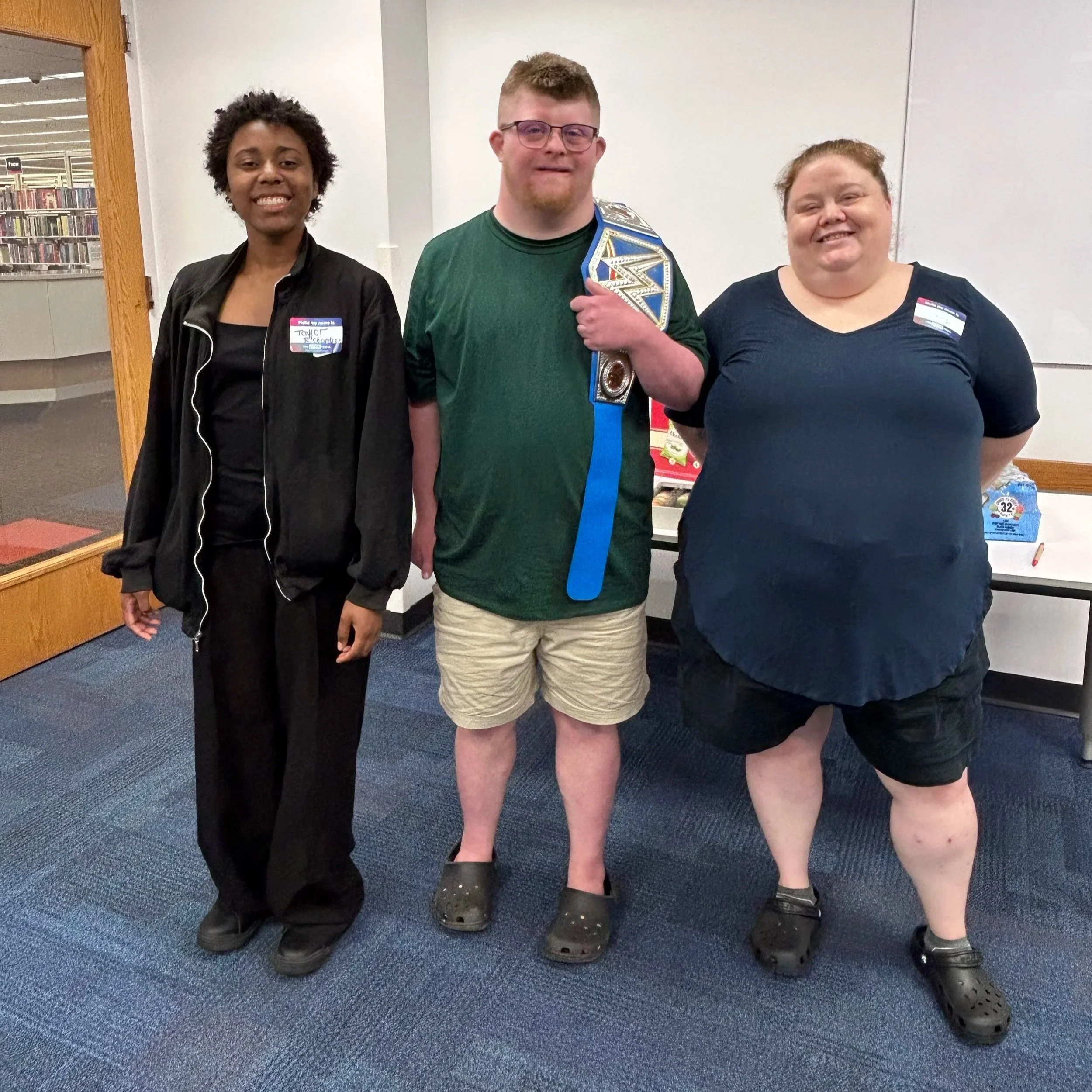
This year's Big Table was especially meaningful because it was my second experience participating in the event. During my first year, I spent more time observing. This year, I had the opportunity to take on a greater leadership role alongside two other Voices Fellows, Mary and Alex. We helped develop the questions and prompts for the conversation and guided discussions at different tables.
Being in a leadership role means a lot to me. It gives me confidence and reminds me that I can make a difference. I want to see workplaces and communities think outside the box, welcome creative ideas, and involve people who believe in the potential of others. More empathy and a genuine interest in understanding people can go a long way.
Events like the Big Table are refreshing because they bring us back to the basics: sharing our experiences, talking through ideas, and creating space where people can be open and honest with one another. Sometimes, meaningful change begins with simply taking the time to listen.
I also believe that many of the skills we need to navigate relationships, communicate our needs, and become leaders are learned through life experiences. These are not always things we are taught in school. We need opportunities to practice, learn from others, and discover who we are in environments where we feel supported.
My Advice to Future Big Table Hosts
If you are thinking about hosting a Big Table conversation, my advice is simple: Be yourself.
You do not have to have every detail structured and planned out. It is okay to have a general direction for the conversation without knowing exactly where every discussion will lead. Be open to what people share, listen to different perspectives, and allow the conversation to develop naturally.
Most importantly, do not feel like you have to mask or change who you are to be a leader. You should feel comfortable being yourself.
I hope we can all become more accepting of our differences and create environments where everyone feels that they belong. We all have something to contribute, and sometimes the most meaningful thing we can do is make space for someone else's voice.