Cerebral Palsy Awareness Month: What My Daughter Has Taught Me About Education, Support, and Advocacy
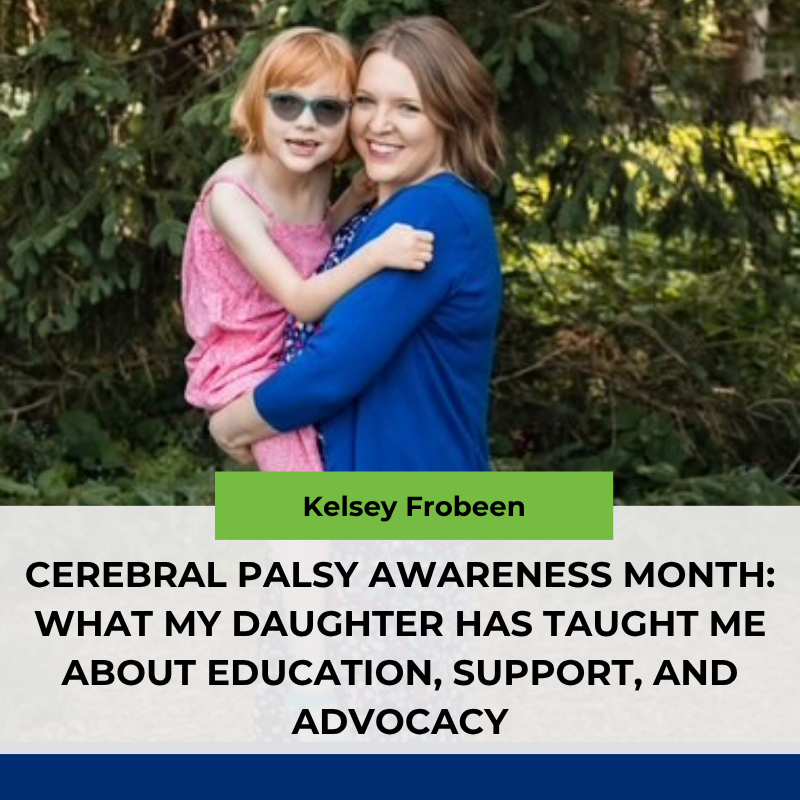
March is Cerebral Palsy Awareness Month, a time to increase understanding of the most common motor disability in childhood and to recognize the experiences of the individuals and families living with it every day. For my family, this month is deeply personal.
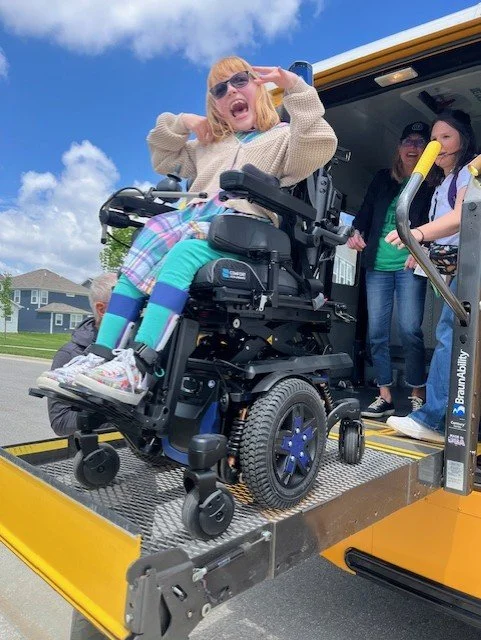
My daughter was diagnosed with Cerebral Palsy at 11 months old. Like many parents, our journey began with questions, uncertainty, and a steep learning curve. Suddenly we were navigating therapies, medical specialists, equipment, and the complex world of educational supports.
Cerebral palsy affects movement, muscle tone, and coordination. It is caused by differences in how the brain develops or by injury to the developing brain. But while the diagnosis may sound clinical, the reality is much more complex. No two children with cerebral palsy look the same.
Some children may have mild physical differences. Others require extensive support for mobility, communication, and daily activities. Many have additional needs that aren’t immediately visible: sensory challenges, learning differences, fatigue, or anxiety that comes from working harder just to keep up with everyday expectations.
What many people don’t see is the amount of effort it takes for these children simply to participate in a typical school day.
Things that come easily to many students — sitting upright at a desk, writing with a pencil, navigating hallways, regulating their bodies in a noisy classroom, transitioning between activities — can require enormous energy and concentration. By the time the school day is over, some children have used every ounce of physical and cognitive effort they have.
As a parent, I’ve seen firsthand how critical education systems are for students with significant needs.
Schools are often the only places where children have access to the full team of professionals they rely on: special education teachers, therapists, aides, adaptive equipment, transportation supports, and individualized learning plans. For my daughter, that team has made the difference between struggling in isolation and truly participating in her school community. These services don’t just happen by chance. They exist because of decades of advocacy and policies designed to ensure that children with disabilities are not left behind.
For families like mine, these systems are not optional. They are essential.
Protecting strong education systems means protecting the infrastructure that allows students with disabilities to learn, participate, and belong in their communities. It means ensuring that classrooms have the resources to support learners with complex needs. It means valuing educators and therapists who work tirelessly to support students. And it means recognizing that inclusion isn’t just a philosophy, it requires investment.
Programs like Learning Aid Ohio play an important role in extending that support beyond the classroom. While schools provide the foundation, many students need additional, individualized instruction to truly access and engage with their learning. Through one-on-one, in-person tutoring aligned to a student’s IEP and unique needs, Learning Aid Ohio helps bridge gaps that can exist in even the strongest school systems. These supplemental supports not only reinforce academic skills, but also build confidence, reduce frustration, and create more opportunities for students with disabilities to experience success in their education.
Cerebral Palsy Awareness Month is not only about understanding a diagnosis. It’s about understanding the broader ecosystem of support that allows children with disabilities to grow, learn, and thrive.
My daughter works harder than most people realize just to do everyday things many of us take for granted. But she is also funny, determined, curious, and fiercely resilient.
Like every child, she deserves the opportunity to learn, to participate, and to be supported by systems that recognize her potential.
My daughter has taught me that strength isn’t always loud. Sometimes it looks like trying again after your body won’t cooperate. Sometimes it looks like showing up to a classroom that wasn’t designed for you and doing your best anyway. Children with cerebral palsy and so many other disabilities are capable of extraordinary things when the right supports are in place. Protecting strong education systems means protecting their opportunity to learn, belong, and be seen for who they truly are. Awareness is a start, but what families like mine really need is commitment: to inclusion, to resources, and to the belief that every child deserves the chance to succeed.
For information about Learning Aid Ohio, please visit www.learningaidohio.org. Please plan to join ElevateDD on April 14 for a webinar, “Exploring Innovative Education Solutions,” to learn more.