
Finding Pride in Disability
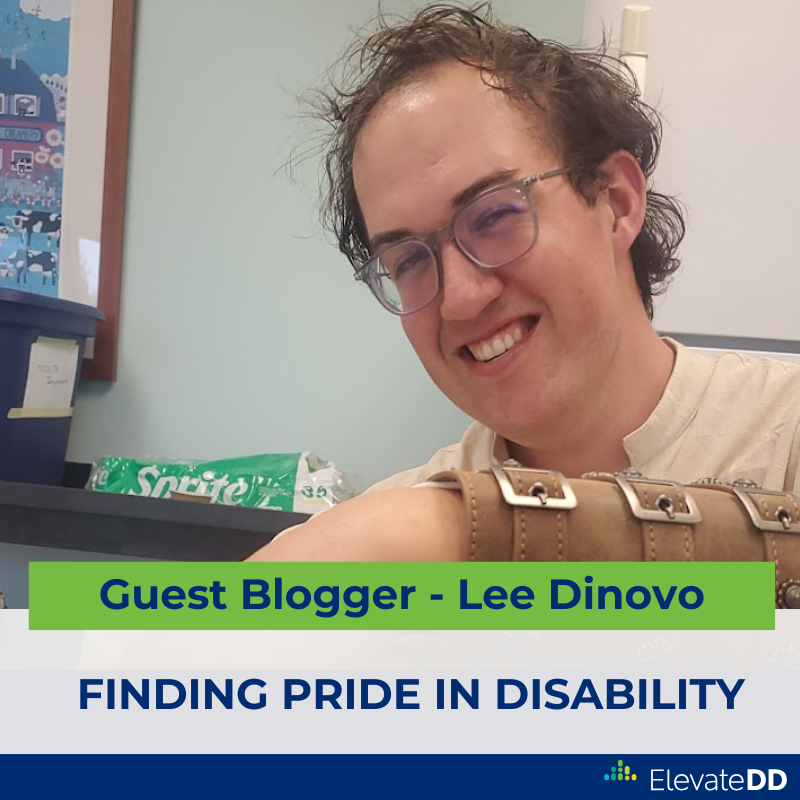
Hello, all! My name is Lee Dinovo, and I am one of ElevateDD’s newest interns. As it is currently Disability Pride Month as of the time of writing this, I thought this would be a good opportunity to share not only my own pride for my identity as a disabled individual, but also the unique niche I have held in the greater disability of Central Ohio for the past six years.
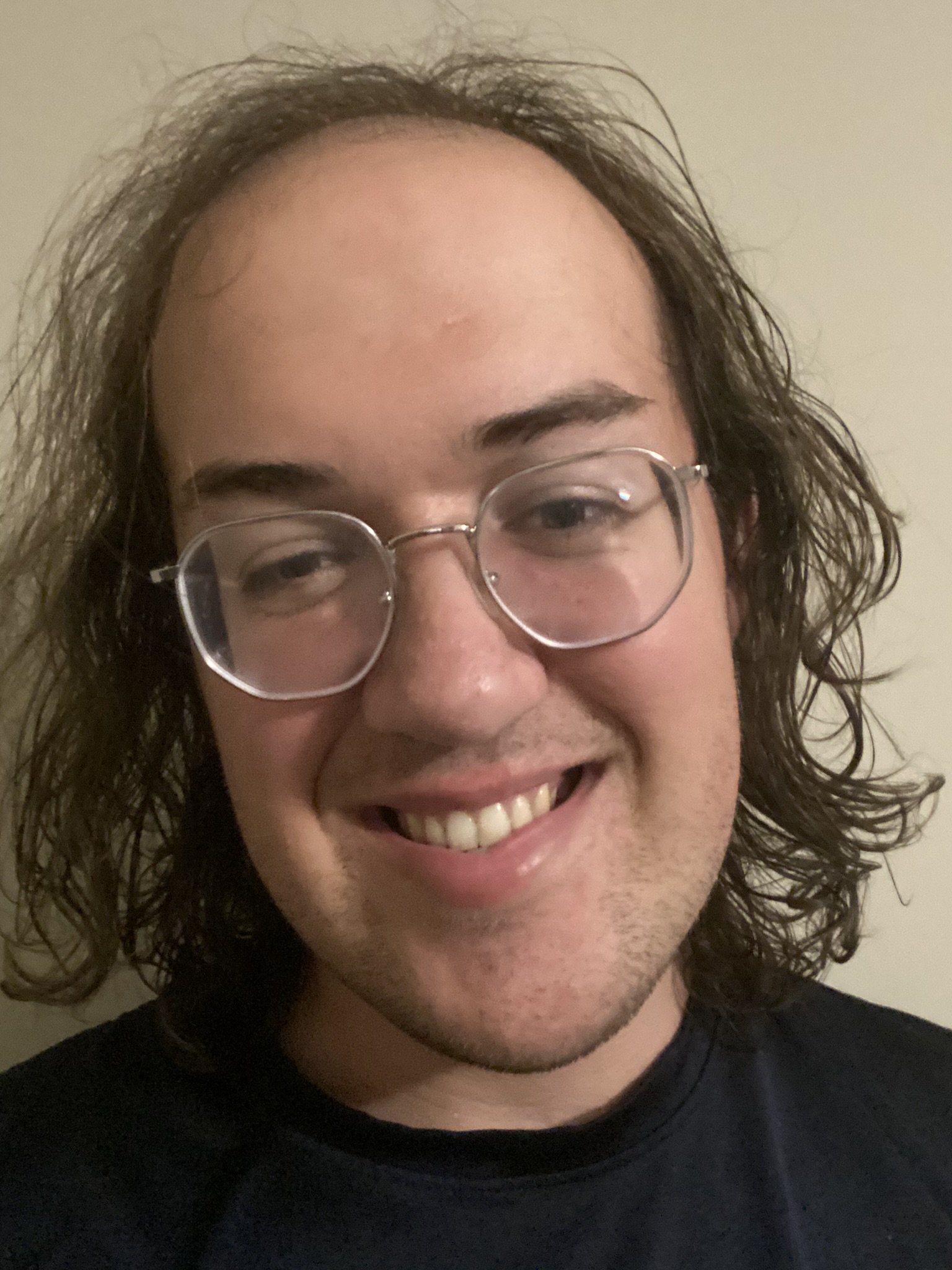
The Pride Within Me
Navigating life as a disabled person has had its challenges, but it has simultaneously been one of my greatest teachers in life. My autism was formally diagnosed when I was fairly young, around six years old or so, but at the time, it was framed as Asperger’s Syndrome, a diagnosis that no longer exists as of 2013 due to being nearly indistinguishable from autism. What was distinguishable, however, was how neurodiversity was handled growing up. The effects of autism on schooling were fairly well understood even when I was a kid, but because I’ve always performed well in school settings, the other needs of my autism were often overlooked. I had next to no friends in elementary school and especially high school, and I didn’t even know I was autistic until my therapist told me when I was sixteen. Every one of my family members but me knew, and for a while, I was frustrated by the fact that a significant part of who I am was withheld from me for nearly a decade. However, the more I chewed on this information, the more that I began to realize why they withheld the information in the first place: they didn’t want me in special education. My mother, father, and grandmother all have a history of working with developmentally disabled children, and I remember that whenever I brought up my frustration to them, they were not mad. They explained to me that the special education program in my elementary and high schools would have only held me back from my true potential, which makes sense. Looking back, the special education programs at the time did not incorporate social skill-building to nearly the same degree as they do today, and so I can understand why they felt as though special education would have limited my potential. Any feelings of frustration that I once had regarding this decision transformed into gratitude, and this is where my pride in my disabilities truly began to blossom.
August of 2020 was a very strange time for everyone in the world, but it was especially strange for me. It was in this month that I lived by myself for the first time and even happened in an unfamiliar state: Indiana. I moved to Purdue for my undergraduate studies and during my time there, my pride in my own disabilities skyrocketed. I not only began to see all the good my autism does for me, but I also began to see silver linings in my less-noticeable disabilities. My autism has given me a type of creativity that I feel can’t be replicated by many of my more neurotypical friends, and it has served me well in both the inventive thinking in my schoolwork as well as the various artforms I’ve dabbled in. My very poor eyesight gave me the patience required to not rush through life, as well as the wisdom to not stress myself out over things I can’t control. I am more grateful now for my disabilities now than I’ve ever been in the past, and I am at the point now where I feel as though I can help others do the same.
The Pride Around Me
The beginning of my work within the subpopulation of disabled individuals actually started in Purdue, where I joined, and later ran, an autism support group made up of entirely autistic individuals. I took a special interest in this group because, prior to then, I had never heard of an organization that was both made for and ran by autistic people, and I thought that this distinction is very important to have within this community. In our group meetings, we would have a round-table discussion regarding various aspects of life that we wanted to talk about, whether that be regarding any concerns about the life aspect or whether it’s any joys or strengths about it. I feel as though this support group helped me out a lot, and I’ve noticed significant changes in the lived experiences of both myself and some of the other participants who believed in the group.
My next venture into this community, and the longest-lasting one to date, is my work with an organization called Recreation Unlimited. This non-profit organization serves individuals of all ages who possess a wide range of disabilities, and provides them an opportunity to engage in a variety of fun outdoor activities without any fear of having their opportunities being limited by their disability. Outside of facilitating these activities, Recreation Unlimited allowed me to facilitate something that isn’t outwardly stated at first glance: community-building. Many of the regular attendees at Recreation Unlimited are friends with each other both in and out of the facility, with a few sets of attendees even being romantic partners, and yet there are some still who have never been to a place like that before. Being able to foster and build both new and old communities and socialization amongst these attendees was, by far, my most favorite part of that job. It’s the main thing that made me keep coming back in the five years I worked for them, and it’s also the place where I got the most opportunities to foster folks’ pride in their own disabilities.
My Role in My Community
It didn’t take me very long to recognize a niche I had while working at Recreation Unlimited, and that’s my status as a disabled person working within the disability community. Even if I didn’t share the same disability as the people I was working with, I was still able to connect with their lived experience as a disabled person trying to navigate a world that’s not always kind to those who are different. I knew that this wasn’t something that many of my other coworkers could genuinely do, and it’s a niche that I still hold in high regard today. I know that when I look for guidance or assistance of any sort, I prefer people who have experience with the concern I have, whether that be the person experiencing it themselves or that the person has worked with the concern for a while. Being able to fulfil this role for others is never really something I thought I’d get to do, but here I am getting the opportunity to perform this role at ElevateDD too. There are, however, aspects of this niche that I’ve learned to keep under consideration as I navigate the field of social work. The most prominent of these is the fact that my capabilities as a social worker get underestimated because of my disabilities. I’ve noticed that in the past, I would get talked to by coworkers as if I had just started the job, even when the coworker in question has been working at my job for less time than me. I still can’t pinpoint why this occurs, but in each of these instances, I’ll almost always demonstrate my skills to the point where they stop questioning my capabilities. The other main thing is that I need to be especially careful not to project my own experiences on those that I serve. It’s a fallacy that comes with sharing an identity with someone, and I feel as though it’s a fallacy that’s easy to fall in if I’m not careful. Being able to walk the line between empathizing with the lived experiences of those I work with while not assuming anything about said lived experience can be very difficult, especially in cases where the people I’m working with don’t have the same disabilities as me. I’ve found that keeping up on practicing good cognitive dissonance skills has helped me to not fall into this fallacy because it allows me to mentally separate enough of my own experience out, and I can then only apply things that are relevant to the people I’m working with while keeping anything that may create an assumption out of the situation.